2026 I&TLC Session Schedule
View the full lineup for I&TLC 2026, taking place on Monday, December 7, at the HSLC Interactive Learning Center and live on Zoom Events. The day is packed with a keynote address, breakout sessions, and time to connect with colleagues from every corner of campus.
Select any time block below to see session descriptions, speakers, and locations. Times are listed in Central Time, and sessions may change before the event, so check back for updates!
8:15 AM – 10:25 AM
Check-in
- Pick up your name badge
- Create your conference agenda
- Connect with colleagues
- Enjoy food and beverages
Breakfast Menu
- Regular and Decaf Coffee
- Apple Juice
- Water
- Cinnamon Rolls
- Assorted Greek Yogurts
- Egg, Potato, and Cheese Breakfast Burritos
- Sausage, Cheese, and Egg Sandwiches
- Canadian Bacon and Cheese Flatbreads
Join our Post-it Note activity to share your thoughts on some IT Leadership questions.
Results will be combined with in person post-it notes and shared with everyone during the final session.
Keynote
Leah Bowers
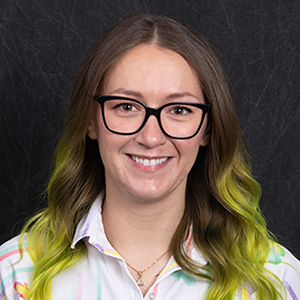
User Experience Architect
Center for User Experience (DoIT)
Moderators: Dave Perez, Phil
10:25 AM – 11:40 AM
Enjoy an assortment of snacks, beverages, and conversations to fuel your body and mind for the remaining morning sessions.
Bringing People Along: Mapping Allies
Successful change efforts rarely succeed because of a good idea or good intentions alone. Positive change happens when leaders understand how it affects others and intentionally engage those who can support, influence, or impede progress.
This session will focus on a hands-on mapping exercise, in which participants will examine a change initiative within their organization and identify potential allies, influencers, and barriers. Participants will explore how change is experienced by different players and will identify practical strategies for bringing others along more effectively.
Participants will learn how to identify the individuals and groups who can support, influence, or hinder a change effort. Through a hands-on activity, they will map key players related to a real change project from their own organization. This exercise will help them uncover overlooked relationships, assumptions, and engagement opportunities, and discuss them with peers during the session.
Christian Schmieder
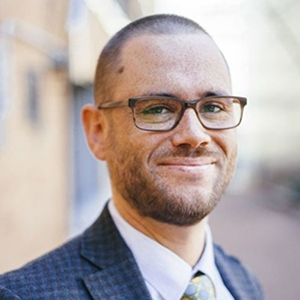
Assistant Director
UW–Madison Division of Extension
As a leader with a background in research methodology, education and evaluation, I prepare organizations for the systematic collection and analysis of data.
In my role as Assistant Director at the UW–Madison Division of Extension, I lead and manage the design of central data collection systems (central programmatic reporting system and central registration system). This includes the design of institutional reporting policies and the implementation of digital infrastructures for entering, visualizing, and analyzing data. In addition, I manage our organization’s programmatic reporting to USDA-NIFA.
In the past, I’ve worked as an independent research consultant, supporting researchers and institutions with teamwork and project management, use of qualitative methods, and integration of qualitative data analysis software.
I studied linguistics and sociology (M.A.) at Freiburg University (Germany) and hold a PhD from UW–Madison in Education. My doctoral work focused on how analysts learn their professional craft, especially when using technology in their work. Prior to my studies, I served in the German Naval Forces as a flag and morse specialist, and I freelanced for a regional newspaper.
In my free time, I love cooking elaborate and not-so-elaborate meals, and I enjoy games of all sorts (board & digital).
Faster Isn’t Closer: What AI actually does to trust
AI is making IT faster but isn’t bringing us closer to the people we serve.
Technology can both solve process problems and multiply relationship problems. Drawing on a relationship health assessment across 19 departments, and a contract that took ten months to sign — nearly four of them waiting on a low-risk security review — this session offers one question worth asking of any tool before you adopt it, and names the part of trust that AI can never carry.
Participants will consider the following:
- Before adopting AI, ask: does this make me more necessary, or less?
- Before trying to fix your organization, you have to aim the tool.
- AI can help you be reliable but it can’t help you be sincere.
- AI doesn’t fix person-dependent trust – it postpones the discovery.
Ken Fanta
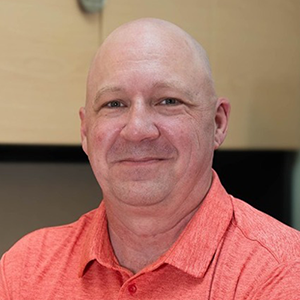
IT Business Relationship Manager (MBRM, CBRM)
University of Wisconsin–Madison School of Medicine and Public Health
Ken Fanta is the Business Relationship Manager (BRM) for the UW–Madison School of Medicine and Public Health (SMPH). His job is to make sure IT and the people it serves are talking to each other. He has more than 30 years in IT, 18 of them at UW–Madison. That includes 16 years as IT Director for the SMPH Departments of Orthopedics and Rehabilitation and of Urology, so he knows how central IT decisions look from the department side.
Ken holds a Master’s in Information and Communication Technology from UW–Stout and is a Master Business Relationship Manager (MBRM). He also mentors others in IT. He has spoken at BRM Connect, the global BRM conference, two years running. In 2025 he explained how to build the BRM airplane at 30,000 feet while flying it. In 2026 he presented “The Bridge That Started to Break: When Trust Depends on You” and joined a higher-education panel with Purdue, Texas A&M and the University of Florida.
When he isn’t building bridges, you’ll find him on a pool deck as a certified swimming official at the club, high school and NCAA levels. Unlike in IT, the rules there are written down and everyone agrees on them.
From Awareness to Action: Helping Neurodivergent Talent
This session bridges the gap between neurodiversity awareness and practical leadership action, equipping higher education IT and cybersecurity managers to build inclusive work environments where neurodivergent talent can excel. Rather than trying to “fix” the employee, this session focuses on reframing workplace friction such as sensory overload, chaotic virtual meetings, unstructured deadlines, and rapid context switching as a signal to address environmental and systemic barriers as a means for all team members to thrive in the workplace.
Participants will learn the basics of navigating Title I ADA legal boundaries, adopt accurate neurodiversity terminology, and recognize how standard behavioral expectations inadvertently screen out specialized technical talent. Attendees will also gain an actionable manager-focused toolkit featuring strategies for constructive conversations, accessible meeting design, everyday assistive technology, and a structured four-step feedback model. Together, these tools eliminate “shame-based guessing” to foster psychological safety and build a clearer, calmer, and more effective work environment for the entire team.
Sara Tate-Pederson
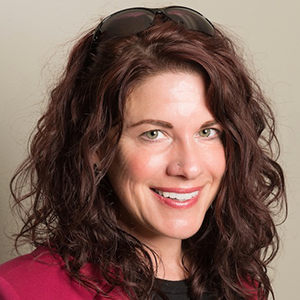
Compliance and Cybersecurity Associate Director
College of Engineering
Dynamic cybersecurity and IT professional with 30+ years of experience, I currently serve in the role of Associate Director – Compliance and Cybersecurity at the College of Engineering. Throughout my entire career I have been an active participant and facilitator on a wide variety of strategic initiatives and committees across the university. Outside of my service with the college and UW–Madison, I enjoy opportunities to hike in our National Parks, indulge in hobby geology, and build with LEGO.
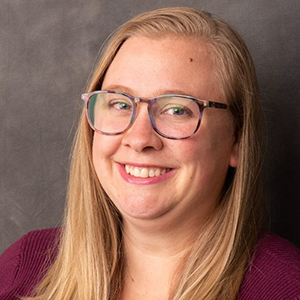
Manda Johnson
Associate Director of User Support
College of Engineering
With more than 15 years of experience in higher education IT, Manda Johnson believes that great customer service starts with supporting the people who provide it. She has led help desk, desktop support, and service delivery teams with a servant leadership approach, focused on removing barriers, investing in growth, and trusting people to do their best work. She is passionate about IT service management and about making technology support feel human, whether that means rethinking a process or simply listening to the people it serves.
Manda is a strong advocate for workplaces where everyone belongs, especially for women in IT. She is a past co-lead of the Big Ten Academic Alliance Women in IT+ Executive Team and has served on multiple campus committees and organizations.
Manda holds a BS in Information Science and Technology from UW-Milwaukee and an MBA with an emphasis in IT Management from UW-Whitewater, and she is a certified Project Management Professional (PMP). In her free time, you can find her playing tabletop games, camping and kayaking with her partner, or relaxing at home with her cats.
11:40 AM – 12:20 PM
Use this time to take a movement break.
Regulated Research Team: Building an enclave & supporting broader research
This session will explore the creation of a dedicated Regulated Research team at Division of Information Technology, the development of a secure research enclave initially focused on Department of Defense but then broadly designed to support researchers across the institution, and how the team can help bridge connections between IT and other campus research stakeholders.
Participants will:
- Understand the process of building a new team and managing mission scope in its infancy.
- Learn about the UW–Madison Regulated Research Enclave, how it fits into current regulatory and research landscape, and what the roadmap looks like.
- Identify opportunities for campus members to provide input for the team to help navigate IT regulations in research.
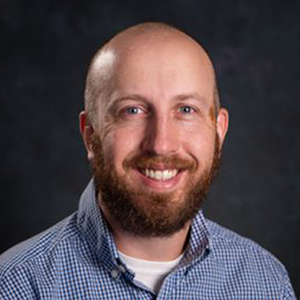
Steve Behring
Research CI Manager for Regulated Research
Division of Information Technology
Steve Behring is the Research CI Manager for Regulated Research at the UW Madison Division of Information Technology (DoIT). In this role, he is building a team to build and maintain a secure research environment focused initially on Controlled Unclassified Information (CUI) for Cybersecurity Maturity Model Certification (CMMC) requirements. In addition to that effort, Steve helps researchers and their teams navigate regulatory compliance, particularly around cybersecurity requirements.
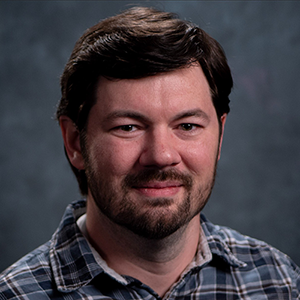
Lucas Gallagher
Regulated Research DevOps Engineer
Division of Information Technology
Lucas Gallagher recently joined the Regulated Research team in UW–Madison’s Division of Information Technology (DoIT) as a DevOps Engineer. With a background in cybersecurity, he previously helped build and operate the UW–Madison School of Medicine and Public Health’s secure cloud enclave for medical research. Lucas is passionate about automation as a means of helping small teams deliver secure, scalable services while keeping pace with growing demands.
Side Quests, Power-Ups, and Plot Twists
In this session, Anna and Brian will share their nonlinear, opportunistic, deliberate, serendipitous career paths, the contrasts between them, and how their stories might resonate with middle managers and others who feel stuck or uncertain about their next step.
Anna made a deep anchor pivot after 25 years on a traditional ladder path within the same school, making a dramatic change. Brian moved from central IT to a new non-IT position after previously holding interim director roles. They will share a little about how they arrived at their current roles.
There are unique ways to build an individual portfolio of experiences. It might require leaving one’s comfort zone or a familiar work environment, bringing along transferable skills like team building, managing change, and strategic thinking. We might choose a path that takes us through a lateral or downward move, which might broaden organizational and institutional knowledge, emotional intelligence, and contextual understanding. Saying yes to interim roles gives us a sandbox, a place to try things out. It can be a low-risk, high-exposure opportunity.
Brian and Anna’s contrasting experiences show there’s no single formula and no set path, though there are ways to be prepared and intentional in the journey.
Participants on this session will consider:
- When to choose a career lattice rather than a ladder
- Figure out when to say yes to opportunities
- Determine when to take that decisive leap
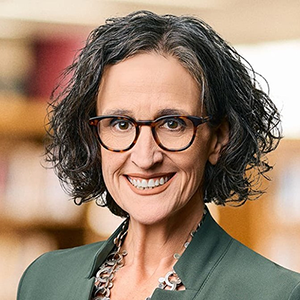
Anna Lewis
Director of Academic Technology & Libraries, CoDirector of MERIT
School of Education
Anna Lewis began her role as the Associate Dean of Libraries for Information Technology and Administration in 2025. She served as co-CIO and co-director of MERIT (Media, Education, Research & Information Technology) at the UW–Madison’s School of Education. Both MERIT Library and the Cooperative Children’s Book Center (CCBC) reported to her. In the School of Education, she guided teams on initiatives that strengthened the school’s systems and budget planning, while advancing initiatives like new faculty onboarding and the construction of new active learning classrooms.
Lewis served the broader UW–Madison community by helping to create the campus policy library and implementing new supports for staff encountering hostile and intimidating behavior. She has served on numerous committees, including the Divisional Technology Leadership Group and the Libraries Leadership Council.
Lewis also served as Interim Director of Research IT at the Wisconsin Center for Education Research (WCER), one of the largest university-housed educational research centers in the nation. Prior to her roles at UW–Madison, Lewis was a high school librarian in Raleigh, North Carolina.
Brian McNurlen
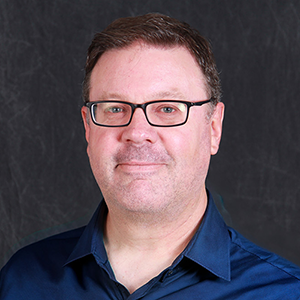
Associate Director for Evaluation & Project Management
Center for Teaching, Learning and Mentoring (CTLM)
Brian McNurlen is an experienced leader in educational technology and development, having managed higher education teams supporting learning management systems; faculty development programs; learning spaces; computer labs; instructional design; audio and video production; strategic consulting; program evaluation; project management; and IT training. His graduate work was in program evaluation, instructional design, and collaborative reasoning, and he has taught child development for elementary education majors. He has authored or co-authored several papers in peer-reviewed journals and presented at national conferences. Previously, Brian held leadership positions in DoIT Academic Technology and at the University of Illinois Urbana-Champaign. He is an alumnus of the MOR Associates’ IT Leaders Program (‘08) and Educause’s inaugural Breakthrough Models Academy. Outside of work, Brian enjoys running a nonprofit for adaptive cycling.
Supporting a Tool vs. Running a Service
Once a platform goes live, the line between keeping software running and delivering the service built on top of it gets blurred. This session walks through what it means to support a tool – platform administration, integrations, vendor management, and technical troubleshooting – versus what it means to run a service – intake and user experience, SLA commitments, singular process ownership, and continuous improvement through an ongoing improvement cadence.
Participants in this session can expect to walk away with:
- A clear mental model for separating two often-conflated responsibilities: supporting the underlying tool (configuration, integrations, vendor management, uptime) versus running the service built on it (intake, SLAs, requester experience)
- A framework for where governance fits: seeing how tool, service, and governance stack as distinct layers, each with its own scope and success measures, rather than treating “the platform is live” as the finish line
- Why process ownership has to be singular: 1) the reasoning behind assigning one accountable, authoritative owner to a process rather than distributing ownership across a group, and 2) what that role actually requires (authority to enforce, cross-functional visibility, proximity without capture)
- How to recognize the shift from project mode to service mode: the practical differences in what “success” means before and after go-live (deployment vs. sustained value delivered), so teams know what changes in their day-to-day once a project transitions becomes operationalized
- A vocabulary for talking about this distinction with stakeholders such as providing a common language to use when scoping responsibilities, or explaining why “the software works” isn’t the same as “the service is working”
Miguel Garcia-Gosalvez
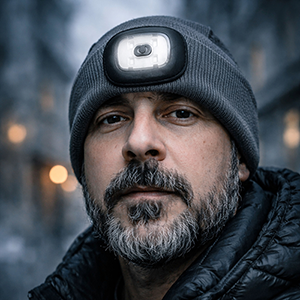
Associate Director, IT Service Management Manager
Division of Information Technology (DoIT)
Miguel Garcia-Gosalvez is Associate Director and IT Service Management Manager in the Division of Information Technology (DoIT) at the University of Wisconsin–Madison. He leads the IT Service Management team within Systems Engineering & Operations. He co-leads DoIT’s move from Cherwell to Ivanti Neurons for ITSM. His work centers on shifting ITSM from supporting tools to delivering services. He has deep expertise in Incident, Problem, Change and Event Management as well as Configuration Management (CMDB).
Miguel has more than 25 years of experience in technology leadership, analytics, consulting and teaching. He served as CIO at Casals & Associates, a DynCorp International company, and led HR analytics at UW System. He also consulted with WhittmanHart and taught at ESADE Business School and the Wisconsin School of Business. He holds ITIL and PMP certifications and completed the MOR IT Leaders and UW System LEaD programs. He chaired the Academic Staff Committee at UW System Administration.
Miguel grew up in southeast Spain, speaks English and Spanish, and lives in Madison, Wisconsin.
12:20 PM – 1:35 PM
Lunch Menu
- Build Your Own Taco Bar: Chicken, ground turkey blend, black beans, cilantro lime rice, white rice, peppers & onions, tortilla chips, cheddar jack cheese, lettuce, sour cream, guacamole, chipotle sauce, and pico de gallo
- Garden Salad: Romaine lettuce, cucumbers, carrots, tomatoes with ranch dressing
- Assorted Cookies
Community, Vulnerability, and the Wisconsin Idea
This session will explore the reciprocal connections between community, vulnerability, and the Wisconsin Idea through examples in two distinct communities that became unexpected spaces of learning.
As a first-generation immigrant living in Minneapolis, Operation Metro Surge affected me personally and professionally in ways that I never could’ve imagined. Metro Surge, a deadly federal immigration enforcement operation primarily affecting the Twin Cities, resulted in challenges and shortcomings that I experienced during this time and taught me many lessons about how vulnerability enables people to accept support, build relationships, and ultimately contribute back to the communities that sustain them.
It was fascinating to experience the embodiment of that community in two distinct environments. In my neighborhood, strangers were brought together by shared trauma and grief. Similarly, I was brought closer to, and supported by, the coworkers with whom I shared what I was dealing with. Although these communities existed in very different contexts, they shared a common characteristic: both became spaces of learning. My neighbors taught me what solidarity looks like in practice, while my coworkers taught me the value of vulnerability and asking for help. Looking back, these experiences embody the Wisconsin Idea, the general principle that education should influence people’s lives outside of the classroom and they highlight that it is not just about bringing knowledge into communities. It is also about recognizing that communities themselves produce knowledge through shared experience, vulnerability, and mutual support.
As I continue to grow and heal from this experience, I continue to look for ways that I can contribute to the communities I am a part of. Through opportunities like this one, I’ve learned that embracing the Wisconsin Idea can be as simple as sharing our experiences and learning from those around us. The communities that carried me through this difficult time taught me lessons about vulnerability, solidarity, and mutual support that no classroom ever could.
Ignacio Rodriguez Cortes
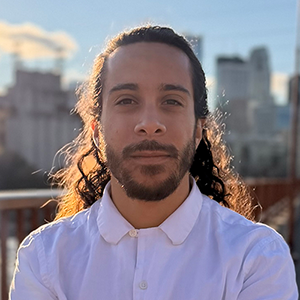
Honest Broker
Informatics and Information Technology
Ignacio serves as an Honest Broker for the University of Wisconsin–Madison School of Medicine and Public Health. In this role, he enables secure access to data, facilitates research, and supports regulatory compliance. Some of his key responsibilities include supporting researchers’ cyberinfrastructure (CI) needs, consulting on research proposals, and serving as a subject matter expert on de-identification. Before joining UW–Madison in 2023, he worked as a Software Developer for an electronic health records company and earned a B.A. in Computer Science from Carleton College. In his free time, Ignacio enjoys following developments in privacy and cybersecurity, hiking, backpacking, and playing several sports.
Engaging Stakeholders & Empowering Teams with Agile Projects
Learn how the Information Technology unit in the School of Medicine and Public Health launched a project to replace legacy applications and department-specific manual procedures with a new application that helps research administrators do portfolio planning and fiscal projections.
This session will share key success factors including:
- engaging stakeholders on a regular basis
- focusing on “the next important thing”
- defining specific pieces of functionality describing the “what” and the “why”
- empowering the development team to work in a self-managed agile manner
- continually deploying working code that stakeholders can test and provide feedback on
While the development work will continue for perhaps another year, the team has been able to deliver working software that meets researchers’ most pressing needs. Stakeholders have been overwhelmingly positive about what we have delivered so far and what is on the horizon.
Jim Helwig
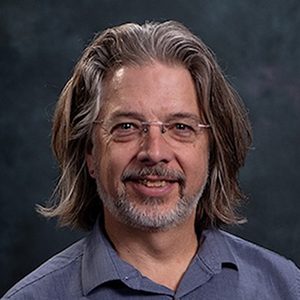
Application Development Manager
School of Medicine and Public Health (SMPH)
Jim Helwig has worked at UW–Madison since 2001. He currently manages a team of software engineers in the School of Medicine and Public Health that develops custom web applications to meet the unique administrative and educational needs of the school. Prior to that, he was the lead strategist for the MyUW portal team for nearly two decades. Jim continues to be a proponent of and participant in mentoring, coaching, and bridge building efforts on campus.
1:35 PM – 2:45 PM
Use this time to take a movement break.
The People Side of Change: Introducing UW–Madison’s Change Management Framework
Technology changes rarely succeed based on the technology alone. Whether implementing a new system, changing a process, or replacing an existing tool, the people who use, support, and experience the change play an important role in whether it delivers the intended results.
Developed by UW–Madison’s Office of Strategic Consulting in partnership with campus colleagues, Stage, Engage, Act, Thrive (SEAT) is a practical change management framework and toolkit designed for the university environment. Rather than prescribing a rigid methodology, SEAT provides a flexible, people-centered way to think through the questions, conversations, and actions that help people understand, adopt, and sustain change.
In this interactive session, participants will be introduced to SEAT and explore practical tools for addressing the people side of change. Through a real world scenario, participants will consider how they can apply the framework to changes they are leading, supporting, or partnering on at UW–Madison.
From this session, participants will be able to:
- Recognize the people side of change and its connection to successful project and organizational outcomes.
- Identify when and how UW–Madison’s change management framework can support change initiatives.
- Apply practical change management tools and questions to better prepare, engage, and support people through change.
Jenny Erickson
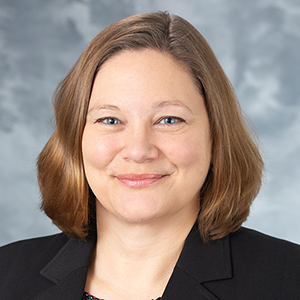
Capacity Building Lead
UW Madison, Office of Strategic Consulting
Jen Erickson has over 20 years of experience in community development, with a deep focus on organizational and leadership development. As the Capacity Building Lead in the Office of Strategic Consulting at UW–Madison, Jen designs and coordinates a comprehensive program to strengthen organizational effectiveness and leadership capacity across campus. Her work includes developing learning experiences and equipping teams with tools to lead change, improve performance, and foster healthy workplace cultures.
Prior to joining the Office of Strategic Consulting, Jen served as a professor and community development educator with the UW–Madison Division of Extension. In that role, she partnered with local organizations to identify educational needs, implement research-informed solutions, and evaluate impact. Jen holds both a Bachelor of Science and Master of Science degree from UW–Madison.
Automate the Tedium, Not the Thinking
Most researchers learn about reproducibility the hard way: a project that worked fine on their laptop breaks the moment someone else runs it, or their own future self can’t reconstruct what a script did six months earlier. However, a lot of that breakage isn’t about bad analysis; it’s about structural friction – the tedious scaffolding work that’s easy, but costly, to skip.
In this workshop, I’ll walk through three of the most common friction points in a project’s life: setting up a consistent project structure by hand versus letting a single function do it; writing scripts that break depending on how they’re run versus detecting that context automatically; and saving outputs in an ad hoc, undocumented way versus producing sanitized, manifest-tracked files by default. For each, I’ll show the manual approach most researchers fall into, then show how toolero, an R package I’ve built and published to CRAN, automates that piece of tedium.
Participants don’t need to know or write R to follow along; the goal is for everyone to leave able to name these same friction points in their own team’s tooling.
Participants will walk away with three concrete, portable examples of what automating the tedium, not the thinking, looks like in practice: consistent project structure instead of ad hoc conventions, automatic execution-context detection instead of brittle path hacks, and manifest-tracked output instead of undocumented file sprawl.
Erwin Lares
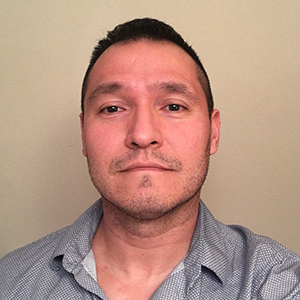
Research Data Science Consultant
University of Wisconsin–Madison, Division of Information Technology
Erwin Lares is a Research Data Science Consultant with Research Cyberinfrastructure (RCI) at UW–Madison. Most of his work goes into managing and maintaining RCI’s Data Science Platform, a service that makes researchers’ work visible and interactive for their peers and the community at large. He also helps researchers move their analyses from a laptop to the Center for High Throughput Computing (CHTC).
Whether a project ends up on a cluster or the Data Science Platform, how well it holds up depends on how it started. Much of that start is tedium (setting up folders, templating documents, cleaning column names), and under deadline pressure it is easy to rush it in ways that hurt reproducibility later. toolero, an R package on CRAN, automates that tedium so that projects begin on a reproducible footing and the thinking stays with the researcher.
Erwin came to research computing from linguistics, earning a PhD with research on the phonology and syntax of idiomatic verb-object phrases. He develops training materials on reproducible practices, organizes the Badger R Users Group (BRUG), which he founded, and serves as faculty advisor for the Badger BioData Club. When he is not writing R, he teaches aikido and throws pottery.
Imposter Syndrome & Emotional Intelligence
70-84% of people experience imposter syndrome. It is defined as a collection of feelings of inadequacy that persist despite evident success. You will have the opportunity to discover individual and team strategies for overcoming imposter syndrome, as well as how to support someone experiencing imposter syndrome. This is an interactive presentation that will allow you to practice these strategies as you learn about them.
After completing this session, participants will be able to:
- Articulate what imposter syndrome is and how to recognize it in themselves and others.
- Leave with an arsenal of tools to counteract imposter syndrome and be your own superhero!
- Explore team strategies for overcoming imposter syndrome.
- Understand how to support someone who is experiencing imposter syndrome.
Amy Diestler

Chief Information Security Officer
School of Medicine and Public Health (SMPH)
Amy Diestler is the Chief Information Security Officer for the UW–Madison School of Medicine and Public Health, where she serves as the primary architect for the school’s cybersecurity strategic vision. With a career defined by her ability to bridge technical requirements with business objectives, Amy specializes in developing comprehensive roadmaps that integrate NIST frameworks, IT policy, and risk management into the organizational fabric. Having held previous roles at TDS Telecommunications and Baker Tilly, she brings a sophisticated, multi-industry perspective to long-term security planning and governance. Amy is a CISA and GSLC-certified professional who holds an MBA from UW-Whitewater.
2:45 PM – 4:00 PM
Enjoy an assortment of snacks, beverages, and conversations to fuel your body and mind for the remaining sessions.
Technical Communication
Many technical professionals say that often struggle to get what they want most: buy-in for their ideas.
In this session, we’ll share several lessons learned from various experts in communication including Dale Carnegie, Vanessa Van Edwards and Michael Scott – best practices in communicating with competence and warmth, as well as how to engage in small talk to help build relationships and make you memorable (in a good way). From there we’ll turn to some practical examples for explaining complex ideas such as visual aids, choosing when to be conceptually correct rather than technically correct, and relying on metaphors. For example, app-level auth and IP address whitelisting can be explained as a locked room with a fingerprint scanner.
We’ll close with the role of gratitude and humor at work. Life isn’t a dance recital, and we work with amazing things. We teach rocks to think!
Participants will gain techniques for IT leaders communicating with both technical and non-technical audiences. The goal is for technical audiences to learn more about communicating complex issues and decisions simply, and for non-technical audiences to learn about technical professionals’ communication hurdles.
Sean McConnell
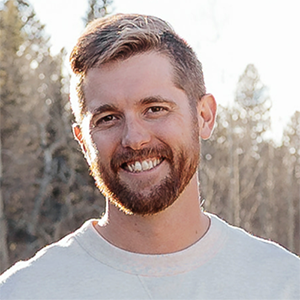
Research Systems Engineer
Division of Information Technology (DoIT)
Right now I’m building secure storage and compute pipelines, working with researchers at UW–Madison, and learning a ton of new things. I love learning in public, tackling hard problems, and helping other engineers level up.
Why Smart Teams Make the Same Mistakes
This session explores why capable people repeat avoidable failures, and why the cause is usually structure and incentives rather than talent. Participants will gain tips on how to fix the system, not just the symptom. Psychological safety is infrastructure. Shared vocabulary speeds up change.
Mike Collins
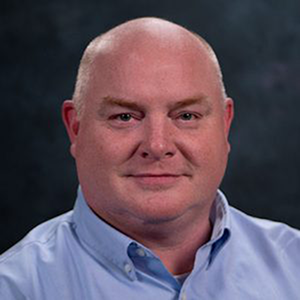
Chief Technology Officer
School of Medicine and Public Health (SMPH)
Mike Collins is Chief Technology Officer of the School of Medicine and Public Health, where he leads AI operationalization, application development, and infrastructure modernization. Over more than 25 years in IT leadership at academic medical centers, research universities, and health technology companies, he has led reorganizations and built teams across multiple organizations, and he has seen up close how capable people end up repeating the same avoidable mistakes.
Mike believes we accomplish more by working together in a culture that is supportive and honest. His technical grounding in cloud infrastructure, security, and compliance keeps his leadership practical. In this session, “Why Smart Teams Make the Same Mistakes,” he examines common leadership antipatterns and shares what helps teams recognize and break them.
When the Race Changes: Accountability in motion
As a coach, I expect my athletes to own their performance. I can provide direction, feedback, and support, but I can’t skate the race for them.
The same tension exists at work: we each have responsibility for our contribution, but none of us controls all the conditions that shape an outcome. So how do we create a culture of accountability within that complexity?
In this interactive workshop, participants will become the coaching staff for a fictional speedskating team. As the season unfolds, teams will draw scenarios that change the conditions surrounding their athletes and decide how to respond. With each new scenario, they’ll consider what has changed, what they know, what they may be assuming, and how different factors interact. Teams will compare their decisions and perspectives throughout the exercise.
Drawing from my experience in competitive coaching, Lean Six Sigma, and IT, we’ll connect what happens on the ice back to our own workplace. Through simulation and discussion, we’ll use systems thinking to explore individual and shared accountability, the environments we create for others, and how we make sense of complex situations before deciding how to respond.
Participants on this session will consider how to:
- Analyze how individual actions, relationships, environmental conditions, and systems interact to shape an outcome.
- Evaluate a situation from multiple perspectives to identify what is known, what is assumed, and where responsibility and influence may exist.
- Apply systems-thinking questions to examine accountability within a situation from their own work.
Mary Murphy
Research Cyberinfrastructure Specialist
University of Wisconsin–Madison, Division of Information Technology
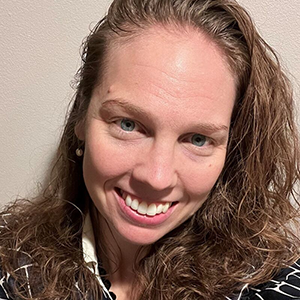
Mary Murphy is a Research Cyberinfrastructure Specialist III at the University of Wisconsin–Madison, where she works at the intersection of technology, people, and organizational improvement. With a background spanning information science, educational leadership, and research technology, she is passionate about creating human-centered solutions that strengthen collaboration, accountability, and meaningful change.
A Lean Six Sigma Black Belt, Mary brings a systems-thinking approach to complex challenges, emphasizing the importance of aligning people, processes, and purpose.
Beyond IT, Mary is a nationally recognized speedskating coach and former national champion. As a US Speedskating Level 3 coach and 2021 U.S. Olympic & Paralympic Committee Volunteer Coach of the Year, she has spent years developing athletes, building programs, and navigating the dynamics of shared responsibility and performance.
Drawing on lessons from both technology and sport, Mary explores how accountability extends beyond individual responsibility to become a shared commitment built through trust, communication, and action.
Use this time to take a movement break.
This session shares the results of the Post-it activity and provides information about upcoming IT Connects events.
Moderators: Dave Perez, Phil Doll